Sunday, July 30, 2006

USMC sniper metes out swift death in Iraq

By ANTONIO CASTANEDA, Associated Press WriterSun Jul 30, 12:57 PM ET

He was 5 when he first fired an M-16, his father holding him to brace against the recoil. At 17 he enlisted in the Marine Corps, spurred by the memory of 9/11. Now, 21-year-old Galen Wilson has 20 confirmed kills in four months in Iraq — and another 40 shots that probably killed insurgents. One afternoon the lance corporal downed a man hauling a grenade launcher five-and-a-half football fields away.

Wilson is the designated marksman in a company of Marines based in downtown Ramadi, watching over what Marines call the most dangerous neighborhood in the most dangerous city in the world.

Here, Sunni Arab insurgents are intent on toppling the local government protected by Marines.

Wilson, 5-foot-6 with a soft face, is married and has two children and speaks in a deep, steady monotone.

After two tours in Iraq, his commanders in the 3rd Battalion, 8th Regiment call him a particularly mature Marine, always collected and given to an occasional wry grin.

His composure is regularly tested. Swaths of central and southern Ramadi, 70 miles west of Baghdad, are dominated by insurgents who regularly attack the provincial government headquarters that Marines protect.

During a large-scale attack on Easter Sunday, Wilson says, he spotted six gunmen on a rooftop about 400 yards away. In about 8 seconds he squeezed off five rounds — hitting five gunmen in the head. The sixth man dived off a 3-story building just as Wilson got him in his sights, and counts as a probable death.

"You could tell he didn't know where it was coming from. He just wanted to get away," Wilson said. Later that day, he said, he killed another insurgent.

Wilson says his skill helps save American troops and Iraqi civilians.

"It doesn't bother me. Obviously, me being a devout Catholic, it's a conflict of interest. Then again, God supported David when he killed Goliath," Wilson said. "I believe God supports what we do and I've never killed anyone who wasn't carrying a weapon."

He was raised in a desolate part of the Rocky Mountains outside Colorado Springs, "surrounded by national parks on three sides," he says. He regularly hunted before moving to Fort Lauderdale, Fla., as a teenager. His brother also serves in the military.

Guns have long been part of Wilson's life. His father was a sniper in the Navy SEALS. He remembers first firing a sniper rifle at age 6. By the time he enlisted he had already fired a .50-caliber machine gun.

"My father owned a weapons dealership, so I've been around exotic firearms all my life," said Wilson, who remembers practicing on pine cones and cans. "My dad would help me hold (an M-16), with the butt on his shoulder, and walk me through the steps of shooting."

Technically, Wilson is not a sniper — he's an infantryman who also patrols through the span of destroyed buildings that make up downtown Ramadi. But as his unit's designated marksman, he has a sniper rifle. In the heat of day or after midnight, he spends hours on rooftop posts, peering out onto rows of abandoned houses from behind piles of sandbags and bulletproof glass cracked by gunfire.

Sometimes individual gunmen attack, other times dozens. Once Wilson shot an insurgent who was "turkey peeking" — Marine slang for stealing glances at U.S. positions from behind a corner. Later, the distance was measured at 514 meters — 557 yards.

"I didn't doubt myself, if I was going to hit him. Maybe if I would have I would have missed," Wilson said.

The key to accuracy is composure and experience, Wilson says. "The hardest part is looking, quickly adjusting the distance (on a scope), and then getting a steady position for a shot before he gets a shot off. For me, it's toning everything out in my head. It's like hearing classical music playing in my head."

Though Wilson firmly supports the war, he used to wonder how his actions would be received back home.

"At first you definitely double-guess telling your wife, mom, and your friends that you've killed 20 people," Wilson said. "But over time you realize that if they support you ... maybe it'll make them feel that much safer at home."

He acknowledges that brutal acts of war linger in the mind.

"Some people, before they're about to kill someone, they think that — 'Hey, I'm about to kill someone.' That thought doesn't occur to me. It may sound cold, but they're just a target. Afterward, it's real. You think, 'Hey, I just killed someone,'" says Wilson.

Insurgents "have killed good Marines I've served with. That's how I sleep at night," he says. "Though I've killed over 20 people, how many lives would those 20 people have taken?"

Wilson plans to leave the Marines after his contract expires next year, and is thinking of joining a SWAT Team in Florida — possibly as a sniper.

Saturday, July 29, 2006

Continued Prayers for Cardinal George

Cardinal out of bed after surgeries


Posted Saturday, July 29, 2006

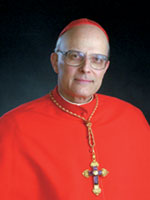
Cardinal Francis George was stable and out of bed this morning, two days after his bladder and prostate were removed to fend off cancer and one day after a midnight scare operation to stop internal bleeding.

The Chicago Catholic Archdiocese reported this afternoon George has stable vital signs and blood counts, with no indication of further internal bleeding.

The 69-year-old, who shepherds 2.4 million Catholics in Cook and Lake counties, plans to be out of bed at least one more time by the end of the day, according to the archdiocese.

“The cardinal expresses his gratitude for all the prayers that have been offered for him and appreciates continuing prayers on his behalf,” the release said.

George, who has been diagnosed with bladder cancer, had his bladder, prostate, several lymph nodes and part of his right ureter removed Thursday at Loyola Medical Center in Maywood. His doctors initially ruled the surgery a success, but cautioned they would not know the extent of his cancer until test results come back next week.

(Daily Herald file photo)
Shortly after midnight on Friday, George was rushed into surgery - his second operation in less than 12 hours - shortly after midnight Friday to stop internal hemorrhaging. Doctors believe the bleeding was caused by a small cut to an artery branch during his radical cystectomy Thursday.

The setback is not expected to derail the cardinal’s recovery.

“It’s not uncommon," said Dr. Myles Sheehan, a priest and George's personal physician. “But it is a complication. He tolerated the operation well.”

Around 7:30 p.m. Thursday, George’s blood pressure dropped after receiving pain medication, Sheehan said. He was given fluids and another blood infusion, but his blood pressure and blood count continued to fall.

Sheehan gave the cardinal, who was awake and lucid throughout the ordeal, a blessing before the surgery. George offered a loud “amen” when he finished, Sheehan said.

The cardinal also shared an inside joke with Sheehan as he headed toward the operating room, the doctor said.

It took the operating team about two hours to repair the damaged blood vessel in the cardinal’s pelvic region, Sheehan said.

After the surgery George was awake Friday morning and prayed the rosary with some Loyola workers and archdiocese staff. He also inquired about Chicago First Lady Maggie Daley, who had breast cancer surgery on Thursday.

“He’s real sharp and in good spirits,” archdiocese spokeswoman Colleen Dolan said. “His sense of humor is right there.”

George also asked about the prayer vigils held on his behalf throughout the Chicago area this week. Dolan said he was touched by the faithful’s response and had read many of the get-well messages left for him.

“I don’t think there’s anyone in the city of Chicago who believes more firmly in the power of prayer than the cardinal,” Dolan said.

George will stay in the hospital at least a week, doctors said. He will remain in the intensive care unit over the weekend and should be cleared to eat in the next three to four days.

Sheehan said he doesn’t want the cardinal to return to pastoral duties before Labor Day. It remains unseen, however, if George will follow the doctor’s orders.

“What I want and what the cardinal will do could be two totally different things,” Sheehan said. “The cardinal does not put up with lying around. He’s going to get up and he’s going to want to move around.”

An active lifestyle would serve George - whose legs were permanently damaged during a teenage bout with polio - well during his recuperation, Sheehan said. It’s important for the cardinal to aggressively approach his recovery to prevent the loss of additional muscle mass in his legs.

“It’s really important that we make sure he retains his muscle mass... so he can maintain his active schedule,” Sheehan said.

Friday, July 28, 2006

Darn it, Jack

Thursday, July 27, 2006


Praying for our Shepherd


Please pray for the shepherd of our diocese, Francis Cardinal George, who is undergoing cancer surgery this afternoon.

Archdiocese of Chicago


Statement of Cardinal Francis E. George, O.M.I
Archbishop of Chicago
to the Archdiocese of Chicago
July 26, 2006


“Tomorrow morning I will undergo surgery at Loyola University Medical Center to remove cancer discovered very recently in my bladder. I am informed that I can expect to make a full recovery from this cancer and the surgery to remove it. I have asked my doctors and Archdiocesan officials to fully brief you after the surgery on the specifics of the operation and my recovery. During my recovery and absence, Father John Canary, the Vicar General, will provide day to day governance of the Archdiocese. He and the Auxiliary Bishops and Mr. Jimmy Lago, the Chancellor, will be in contact with me as necessary.

I ask my fellow priests, the religious, all Catholics in the Archdiocese and other friends and colleagues to pray for me. I trust that the Lord will give me the strength and grace I need during these next days and weeks.”

Francis Cardinal George, O.M.I.
Archbishop of Chicago

The Holy Father Weighs In

From Chiesa:
At the Summit on the Middle East, Benedict XVI Preaches the Cross of Jesus

Less politics – as little as possible – and more Christian faith: this is the new approach the pope wants for the Church. While the armies fight and the diplomats negotiate, in a little mountain parish he says...

by Sandro Magister

ROMA, July 26, 2006 – At the same time as the opening of the international conference on the war in Lebanon in the Italian capital – with representatives from the United Nations, the World Bank, the United States, Canada, Europe, Russia, the Muslim countries, and the Vatican - the position of Benedict XVI distinguishes itself for its sheer clarity and originality.

To grasp this, it is enough to read the brief words he spoke on Sunday, July 23, at two different occasions of prayer.

The first was at the midday Angelus, the only occasion at which Benedict XVI has given the essential political coordinates of the Holy See’s position on the conflict.

The pope said that the three pillars for a stable peace in the region are these:

“the right of the Lebanese to the integrity and sovereignty of their country, the right of the Israelis to live in peace in their state, and the right of the Palestinians to have a free and sovereign homeland.”

He asked the parties in conflict for an immediate ceasefire, and for the opening of negotiations “with the support of the international community.”

And he insisted in particular upon the right to “humanitarian” assistance of the populations struck by the war, both in Lebanon and in Galilee.

But the key point of Benedict XVI’s message at the Angelus was a different one. It was his invitation to make that Sunday “a special day of prayer and penance to implore from God the gift of peace.” It was an invitation he extended, not only to Catholic Christians, but “to all believers.”

At the end of his brief message the pope remembered Saint Bridget, whose feast fell on that day:

“Saint Bridget came from Sweden, lived in Rome, and also went on pilgrimage in the Holy Land. Her witness speaks to us of openness to different peoples and civilizations. Let us ask her to help humanity today to make extensive room for peace. In particular, may she obtain from the Lord peace in that Holy Land toward for she had such affection and veneration.”

* * *

So Benedict XVI shows he has no doubts: the specific contribution that the Church can make to peace in the world is not political, but essentially religious. With the cross of Jesus at the center.

And in fact, during that afternoon – at his second brief address – he again insisted upon this alone: upon Jesus, and following him.

The pope had gone to visit Rhemes Saint-Georges, to a little mountain parish, and to the people crowded into the little church he gave a meditation on the passage from saint Paul that had been read during the Masses that Sunday.

The reading was from the Letter to the Ephesians, 2:13-18:

“Now in Christ Jesus you who once were far off have become near by the blood of Christ. For he is our peace, he who made both one and broke down the dividing wall of enmity, through his flesh, abolishing the law with its commandments and legal claims, that he might create in himself one new person in place of the two, thus establishing peace, and might reconcile both with God, in one body, through the cross, putting that enmity to death by it. He came and preached peace to you who were far off and peace to those who were near, for through him we both have access in one Spirit to the Father.”

And this is how Benedict XVI commented upon it. The meditation lasted seven minutes. The pope did not read from a text, but improvised. Here is the complete transcript of his words, which demand to be read:

How to be a force for peace in the world
by Benedict XVI

Just a quick word of meditation on the reading we have just listened to. What is striking, against the background of the dramatic situation in the Middle East, is the beauty of the vision illustrated by the apostle Paul: Christ is our peace. He has reconciled us with one another, Jews and gentiles, uniting them in his body. He overcame enmity in his body, upon the cross. With his death he has overcome enmity, and has united us all in his peace.

But what strikes us even more than the beauty of this vision is its contrast with the reality we experience and see. And we can do nothing, at first, but say to the Lord: “But Lord, what does your apostle say to us – ‘We are reconciled’?” We see in reality that we are not reconciled... There is still war among Christians, Muslims, and Jews; and there are others who foment war and are still full of enmity and violence. Where is the efficacy of your sacrifice? Where in history is this peace of which your apostle speaks?

We human beings cannot solve the mystery of history, the mystery of human freedom to say “no” to God’s peace. We cannot solve the entire mystery of the revelation of the God-man, of his activity and our response. We must accept the mystery. But there are elements of an answer that the Lord gives to us.

A first element – this reconciliation from the Lord, his sacrifice – has not remained without efficacy. There is the great reality of the communion of the universal Church, found among all the peoples, the fabric of Eucharistic communion that transcends the boundaries of culture, civilization, peoples, and times. There is this communion, there are these “islands of peace” in the Body of Christ. They exist. And they are forces of peace in the world. If we look at history, we can see the great saints of charity who have created “oases” of this divine peace in the world, who have always rekindled his light, and were always able to reconcile and create peace. There are the martyrs who have suffered with Christ, have given this witness of peace, of the love that places a limit on violence.

And seeing that the reality of peace is there – even if the other reality also remains – we can go more deeply into the message of this Letter of Paul to the Ephesians. The Lord has triumphed upon the cross. He did not triumph with a new empire, with a power greater than the others and capable of destroying them; he triumphed, not in a human way, as we would imagine, with an empire more powerful than the other. He triumphed with a love capable of reaching even to death. This is God’s new way of winning: he does not oppose violence with a stronger form of violence. He opposes violence with its exact opposite: love to the very end, his cross. This is God’s humble way of winning: with his love – and this is the only way it is possible – he puts a limit on violence. This is a way of winning that seems very slow to us, but it is the real way to overcome evil, to overcome violence, and we must entrust ourselves to this divine way of winning.

Entrusting ourselves means entering actively within this divine love, participating in this work of peacemaking, in order to conform with what the Lord says: “Blessed are the peacemakers, those who work for peace, because they are the children of God.” We must bring, as much as possible, our love to all those who suffer, knowing that the judge of the last judgment identifies himself with the suffering. So whatever we do to the suffering we do to the ultimate judge of our lives. This is important: that in this moment we can bring this victory of his to the world, participating actively in his charity.

Today, in a multicultural and multireligious world, many are tempted to say: “It is better for peace in the world among religions and cultures that one not speak too much about the specifics of Christianity, about Jesus, the Church, the sacraments. Let us be satisfied with the things that can be held more or less in common...” But it’s not true. At this very moment – at a moment of a great abuse in the name of God – we need the God who triumphed upon the cross, who wins not by violence, but by his love. At this very moment, we need the face of Christ, in in order to know the true face of God and thus to bring reconciliation and light to this world. And so together, with love, with the message of love, with all that we can do for the suffering in this world, we must also bring the witness of this God, of the victory of God precisely through the nonviolence of his cross.

So let’s go back to the starting point. What we can do is give the witness of love, the witness of faith; and above all, raise a cry to God: we can pray! We are certain that our Father hears the cry of his children. At the Mass, preparing for holy communion, to receive the Body of Christ who unites us, we pray with the Church: “Deliver us, O Lord, from all evil, and grant us peace in our day.” Let this be our prayer in this moment: “Deliver us from all evil, and give us peace.” Not tomorrow or the next day: give us peace, Lord, today! Amen.

Tuesday, July 25, 2006

What a Knockout

News Flash

Saw this on Opinion Journal's 'Best of the Web'.

Haig: Iran, Syria Behind Hezbollah
Iran and Syria are responsible for Hezbollah’s aggression against Israel, according to former Secretary of State Alexander Haig.

Wow! Thanks for clearing that up Al. :-)
Dershowitz Right On on Terrorism

I am no fan of Harvard Law prof Alan Dershowitz -- he is at the forefront of most liberal causes. However, I heard him interviewed either yesterday or today on Bill Bennett's 'Morning in America' and he was right on. So, I was not real surprised to see him continue in the same vein in a Chicago Tribune editorial.

If I was uncharitable, I'd quip that even a blind hog finds an acorn once in a while. But, in this case, I'll just post Dershowtiz's editorial. :-)

How the UN legitimizes terrorists

By Alan M. Dershowitz
Published July 25, 2006

If anyone wonders why the UN has rendered itself worse than irrelevant in the Arab-Israeli conflict, all he or she need do is read UN Secretary General Kofi Annan's July 20 statement. Annan goes to great pains to suggest equal fault and moral equivalence between the rockets of Hezbollah and Hamas that specifically target innocent civilians and the self-defense efforts by Israel, which tries desperately, though not always successfully, to avoid causing civilian casualties. In his statement, Annan never condemns, or even mentions, terrorism, which is a root cause and precipitator of the conflict.

Even Annan was forced to acknowledge that "Hezbollah's provocative attack on July 12 was the trigger of this particular crisis"; that Hezbollah is "deliberate[ly] targeting ... Israeli population centers with hundreds of indiscriminate weapons"; and that Israel has the "right to defend itself under Article 51 of the UN charter." But he doesn't stop there. He goes out of his way to insist on equating Hezbollah's terrorists with Israeli military response, which he labels "disproportionate" and "collective punishment." He condemns both Hezbollah and Israel. He also criticizes Israel for its efforts at preventing Qassam rocket attacks against its civilian populations, noting that the Hamas rockets have produced no "casualties in the past month." (This, of course, is not for lack of trying.) He ignores Hamas' long history of terrorism against innocent civilians.

Annan then calls for an "immediate cessation of indiscriminate and disproportionate violence" on both sides, again suggesting a moral equivalence. Among the most immoral positions anyone can take is to suggest a moral equivalence between morally different actions.

Part of the goal of organizations like Hezbollah and Hamas is to gain moral legitimacy for their terrorist tactics by having them equated with the conventional military tactics used by democratic regimes. Only the morally obtuse--or perverse--cannot recognize the difference between a terrorist group that targets civilian population centers with anti-personnel weapons designed to maximize civilian casualties and a democracy that seeks to prevent terrorism by employing smart bombs designed to minimize civilian casualties.

Annan knows better than to suggest a moral equivalence. He is fully aware of the tactic employed by terrorists of launching their rockets from, and hiding behind, civilian shields, so as to make democracies have to kill some civilians to get at the terrorists.

But Annan heads an organization that is so anti-Israel that as the late Abba Eban, the early Israeli ambassador to the UN, once put it: "If Algeria proposed a resolution that the Earth was flat and that Israel has flattened it, it would pass by a vote of 120 to 3, with 27 abstentions."

Many such resolutions have been passed by the General Assembly, including the notorious one equating the Jewish national liberation movement with "racism." Other one-sided resolutions have been passed by the General Assembly legitimating terrorism. Only the U.S. veto--which does not operate in the UN General Assembly--has prevented one-sided resolutions by the Security Council.

If a space alien from a distant planet were to land at the UN, he would come away with the impression that Israel is not only the sole offender in the Middle East, but the worst offender in the entire world. He would single out Israel for condemnation and exclude it from membership on many UN bodies, on which Syria, Lebanon and Iran serve in positions of honor.

Annan himself has a long history of one-sided condemnations of Israel. In March 2004, Annan "strongly condemned" Israel's targeted killing of Sheik Ahmad Yassin, the terrorist leader of Hamas, without condemning Yassin for his murderous actions or his organization for the murder of Jewish civilians. In December 2003, Annan "strongly condemned" Israel's assault on a Palestinian refugee camp where two gunmen were thought to be hiding. And in 2005, he issued the most tepid of statements--expressing "dismay"--at threats by Iran's president to "eliminate" Israel, a member nation of the UN. The list goes on and on.

And even worse than the one-sided condemnations that ignore Hezbollah and Hamas are the numerous statements that perversely suggest moral equivalence.

The UN peacekeepers on the Lebanese border have turned out to be collaborators with Hezbollah, videotaping the Hezbollah kidnapping of three Israeli soldiers in 2000 and then refusing to release the video--which could have helped in the rescue--on the grounds that it might compromise their "neutrality."

This is a real test for the UN. If it cannot--or will not--distinguish between terrorists who target civilians and a democracy that seeks to stop the terrorism while minimizing civilian casualties, it has become part of the problem, rather than part of the solution.

----------

Alan M. Dershowitz is a professor of law at Harvard and the author of "Pre-emption: A Knife that Cuts Both Ways."

Saturday, July 22, 2006

"Cut Off the Head of the Serpent"

I have a good friend who is Lebanese. His brother and parents still live in Lebanon. I saw him today and asked how his family is doing. They are well he told me (thanks be to God) as they live further north and are not directly affected by the violence. We both agreed that the real source of the problem in the Middle East right now is Iran. As my friend so aptly said, there will be no peace in Lebanon until they "cut off the head of the serpent".
U.N. Anti-Israel

After posting the New York Sun editorial, I was reminded of a comment Rush Limbaugh made that the U.N. is a hotbed of anti-Semitism. At the time I thought Rush was being a little over the top. However, I just came across this post from The Volokh Conspiracy. If you thave the time, read the post in its entirety -- it's eye-opening and worth your time. A short excerpt:
UNIFIL's [United Nations Interim Force in Lebanon] most notorious collaboration with terrorists involved the kidnapping and murder of three Israeli soldiers, and the subsequent cover-up.

On October 7, 2000, Hezbollah terrorists entered Israel, attacked three Israeli soldiers on Mount Dov, and abducted them Lebanon. The kidnapping was witnessed by several dozen UNIFIL soldiers who stood idle. One of the soldier witnesses described the kidnapping: the terrorists set off an explosive which stunned the Israeli soldiers. Clad in UN uniforms, the terrorists called out, "Come, come, we’ll help you."

The Israeli soldiers approached the men in UN uniforms. Then, a Hezbollah bomb detonated—-apparently prematurely. It wounded the disguised Hezbollah commander, and three Israeli soldiers.

Two other terrorists in U.N. uniforms dragged their Hezbollah commander and the three wounded soldiers into a getaway car.

According an Indian solider in UNIFIL who witnessed the kidnapping, "By this stage, there was a big commotion and dozens of UN soldiers from the Indian brigade came around." The witness stated that the brigade knew that the kidnappers in UN uniform were Hezbollah. One soldiers said that the brigade should arrest the Hezbollah, but the brigade did nothing.

According to the Indian soldier, the UNFIL brigade in the area "could have prevented the kidnapping."

"I’m very sorry about what happened, because we saw what happened," he said. Hezbollah "were wearing our uniforms and it was too bad we didn’t stop them."

It appears that at least four of the UNIFIL "peacekeepers," all from India, has received bribes from Hezbollah in order to assist the kidnapping by helping them get to the kidnapping spot and find the Israeli soldiers. Some of the bribery involved alcohol and Lebanese women.

The Indian brigade later had a bitter internal argument, as some members complained that the brigade had betrayed its peacekeeping mandate. An Indian government investigation sternly criticized the brigade's conduct.
You can see why the Israeli's are likely not too enthused about more "help" from the U.N.
U.N. Peacekeepers? What a LOUSY Idea!

We're hearing a lot these days about how we should be looking to the U.N. to send Peacekeepers to the Israel - Lebanon border. Anyone with any brains, or even just a modicum of historical perspective, realizes just what a lousy -- and worthless -- idea that would be.

The New York Sun (not the NYTimes (darling of terrorists everywhere)) has a good editorial on why we should say "No thanks" to more U.N. "help".
Rwanda and Srebrenica are the two most notorious recent [U.N. peacekeepiing] failures. Mr. Annan headed the United Nations peacekeeping department during both massacres. In Rwanda blue helmets exited as 800,000 Tutsis were massacred. Despite having advance warning of the genocide, U.N. peacekeepers were told by Mr. Annan's department to remain "impartial." At Srebrenica the U.N. peacekeepers did nothing as Bosnian Serbs murdered 8,000 Muslims — in the U.N.'s "safe haven."

From Sierra Leone, where U.N. peacekeepers were taken hostage, to the Congo, where the peacekeepers traded food for sex with girls as young as 13, the term "U.N. peacekeepers" sends shudders down the spines of the persons they were sent to "protect." For Americans, "U.N. peacekeeping" is synonymous with Somalia. Who can forget the image of the bodies of American soldiers being dragged through the streets?

Read the entire editorial here.

Saturday, July 15, 2006

Are You Ready?

One day, while moseying around the internet, I stumbled across the website for this magazine -- and I was hooked: Backwoods Home magazine.

Now, when it comes to the "back-to-the-country", simpler life-style info, I'm not that big a fan (the wife likes that stuff). However, I was really taken by the underlying philosophy of the magazine: that we live in an overly-complicated, technology dependent world and if there was ever a natural disaster, massive power outage, terrorist attack, or other disaster, most people would be in big trouble. Why? Just try getting through the day without something as simple and taken for granted as electricity.

Say the local power plant had a generator blow and it knocked your area off the grid on a day like today (low 90s and humid). It wouldn't take long before the effects off no air conditioning were felt -- not a problem, but a discomfort.

In my case, I'm on a well, so it wouldn't be long before the water was out. My stove and oven are both electric, so no way to cook apart from the propane in my grill or cooking over an open fire in the yard. Once it got dark, I'd only have candles. There'd be no TV, radio, internet. Cell phones would only be good for so long (I'm assuming the cell phone companies have some generator back-up but it would only last 8-10 hours max.)

So, you get the point. And that's the point of Backwoods Home magazine. Go to this link for an excellent, must-read editorial, in light of Hurrican Katrina, on why we should not sit around waiting for the gov't to rescue us and why we should be ready to take care of ourselves (what a concept!). A short excerpt:

Hurricane Katrina and the inability of Government at any level to respond in a timely, life-saving manner should set off alarm bells in our heads. If you want to protect yourself and your family, don’t follow the advice of the media or opportunistic politicians by voting for a new set of politicians and asking Government to spend billions of dollars on various projects. That won’t do it.

Take your life into your own hands and plan to take care of yourself and your family in an emergency situation. You, any only you, can become the timely power that will save your family when disaster strikes.

Friday, July 14, 2006

"If you pursue evil with pleasure, the pleasure passes away and the evil remains; if you pursue good with labor, the labor passes away but the good remains."

— Cicero
'Nuff Said

Thursday, July 13, 2006

Rush on Immigration

Tuesday, July 11, 2006

Little People in a Big Pond

I got these pictures from a couple of differnt people (they must be making the rounds on the internet). Anyway, they are really interesting to look at and get some perspective at just how small we are in the big scheme of things.

As you check out these pictures, pretend you're a liberal and keep telling yourself: "Man is so powerful, he can destroy the Earth through global warming" and "There is no God -- this universe came into existence all by itself". :-)


(for the astonomically-challenged among you, Sirius, Pollux and Arcturus (above), and Betelgeuse, Antares, Rigel and Aldeberan (below) are (really, really big) stars in our solar system.)


Monday, July 10, 2006

John Adams: A Man Worth Knowing

David McCullough is probably one of my most, if not the most, favorite historians. I was catching up on my reading and saw that he had spoken at Hillsdale College not long ago. (I have to get on the mailing list for this stuff -- I hate finding out who spoke there after the fact).

Anyway, McCullough spoke about John Adams and his comments were published in Hillsdale's periodical Imprimis. (It goes without saying that McCullough's bio on Adams is excellent). Here are some excerpts from his talk at Hillsdale. You can get a free subscription to Imprimis here.

“A Man Worth Knowing”
David McCullough

I want to discuss a single human being [John Adams] and why we should know him. And the first thing I want to say about him is that he is an example of the transforming miracle of education. When he and others wrote in the Declaration of Independence about “life, liberty and the pursuit of happiness,” what they meant by “happiness” wasn't longer vacations or more material goods. They were talking about the enlargement of the human experience through the life of the mind and the life of the spirit. And they knew that the system of government they were setting up wouldn't work if the people weren't educated. “If a nation expects to be ignorant and free, in a state of civilization,” Jefferson wrote, “it expects what never was and never will be.”

***************************

Adams more than anyone got the Continental Congress to vote for the Declaration [of Independence]. We have no records of what he said. Deliberations took place behind closed doors, out of fear of spies in Philadelphia. Keep in mind that only about a third of the country supported the Revolution. Another third was opposed–the Loyalists or Tories, who saw themselves as the true patriots because they were standing by their King. The remaining third, in the human way, were waiting to see who won. But Adams got the Congress to vote for the Declaration and many wrote about it afterwards. If you've seen the musical 1776, you'll remember that he is the central character. That's as it should be. And there are many people in it singing, “Why don't you be quiet, John Adams?” or “Why are you so obnoxious, John Adams?” When I was working on my biography, I tried to find out who called him obnoxious, and I found only one—Adams himself. He wrote to a friend many years later that he must have been rather obnoxious back then, but that he felt he had to make it happen.

***************************

Let me say a word about Abigail Adams. ... She was as bright as can be and had a backbone of iron. She probably didn't weigh 100 pounds, standing only about five feet one. I think she's one of the greatest Americans of all time. And you can discover her, too, in her marvelous correspondence with her husband during his long absences.

Something I always like to emphasize is that there never was a simpler past. We hear often, “Oh, that was a simpler time,” but it's always wrong. Imagine Abigail's life. Up in the morning at about 5 to light the fireplace that served as the kitchen, call to the children to come down, cook the breakfast, tend the stock, try to keep the farm solvent during the whole war with her husband gone and with inflation and with shortages of everything. Schools were closed, so she had to educate the children at home. Her day didn't end until 9 or 10 at night when the children would go upstairs to their bedrooms, where it could be so cold that the water in the bowls that they used to wash their faces was iced over. And then she would sit down at the kitchen table with a single candle and write some of the greatest letters ever written by any American.

In one plaintive letter, she writes: “Posterity who are to reap the blessings will scarcely be able to conceive the hardships and sufferings of their ancestors.” And we don't. We don't know what they went through–epidemics of smallpox or dysentery, which could take the lives of hundreds of people just in the little town of Quincy, Massachusetts. It was by no means a simpler time. They had to worry about things that we don't even think about any more, and suffer discomforts and inconveniences of a kind that we never even imagine.

***************************

Adams was not a great president. But he was a very good one and I think he should be judged as more presidents should be judged–not just by what he did, but what he didn't do. He didn't go to war with France. Had he done so, he would have been re-elected, and he knew it. As it was, the 1800 election was extremely close. A change in about 300 votes in New York City would have re-elected him. And let us not forget that one of the most important turning points in our country, even in the world, was that election, because there was a peaceful transition, following a bitter election, from one party to another. It was not contested by armed opposition, which was the historical norm. Adams went home to Quincy–having traveled more in the service of his country than any other American of that time–and never went anywhere ever again, although he lived for 25 more years.
Desert Island Books

Thinking of lists made me think of an old list question: "what book(s) would you take if you were going to be stranded on a desert island?"

I have a slight twist in mind though. Usually, when folks answer this question, they offer lame answers like "the Bible" or the "Complete Works of Shakespeare". However, I think these answers are disengenious cop-outs as these people have probably not picked up a Bible in years, if ever, so such an answer doesn't really tell you much about them (which is the purpose of the question -- isn't it?)

So, how about this: Name up to five books, which you have already read most/all of, that you would take to a desert island to read again.

I think (assuming one gets honest answers) this question could result in some truly interesting answers. My answers would be (subject to revision based on some more thought) are:
  • My Imitation of Christ by Thomas a Kempis (a timeless classic -- you could never actually be "finished" with this book)
  • He Leadeth Me by Fr. Walter Cieszek (the spiritual journey of a priest who spent the better part of his life as a prisoner of the Soviets)
  • The Civil War by Shelby Foote (not only a great history of the war, but at more than 3,000 pages, it would sure help pass the time on the island!)
  • Keep It Simple by Emmanuel de Gibergues (an eye opener)
  • The Adventures of Huckleberry Finn by Mark Twain (the best American novel ever written)
Getting to Know Your Friends

The "Tag, You're It" post reminded me of a similar e-mail I got a while back from a co-worker called "Getting to Know Your Friends". I dug out the questions with my responses and thought I'd post that too -- updated as needed. :-)

Welcome to the 2004 edition of getting to know your friends. What you're supposed to do is copy (not forward) this entire e-mail and paste it onto a NEW e-mail that you'll send. Change all the answers so they apply to you then send this to a whole bunch of people including the person who sent it to you. The theory is that you will learn a lot of little things about your friends.
  1. What time do you get up? 5:00 AM -- 5:45am
  1. If you could eat lunch with one person, who would it be? Either John Paul II or St. John the Evangelist
  1. Gold or silver? Gold
  1. What was the last film you saw at the cinema? The Passion of the Christ -- The Great Raid
  1. Favorite TV show(s)? None
  1. What do you have for breakfast? Cup of coffee
  1. Who would you hate to be stuck in a room with? Someone with nothing interesting to say. I’d even take Bill Clinton because he wouldn’t be boring.
  1. Who inspires you? Jesus Christ, Robert E. Lee, John Cyboran (my father-in-law)
  1. What is your middle name? Francis
  1. Beach, City or Country? Beach
  1. Favorite ice cream? Chocolate Chip Cookie Dough
  1. Butter, plain or salted popcorn? Buttered & salted
  1. Favorite color? Blue
  1. What kind of car do you drive? Nissan
  1. Favorite sandwich? Reuben from Dudley’s in Barrington (so big, you have to share it with someone else)
  1. What characteristic do you despise? Unfaithfulness
  1. Favorite flower? None
  1. If you could go anywhere in the world on vacation, where would you go? Fiji
  1. What color is your bathroom? Can’t remember -- still can't, but it might be white (?)
  1. Favorite brand of clothing? Eddie Bauer
  1. Where would you retire to? A cabin in the mountains, with a big porch and lots of books
  1. Favorite day of the week? Sunday
  1. Red or white wine? Red (Merlot)
  1. What did you do for your last birthday? Worked -- ditto :-(
  1. Where were you born? Harvey, IL (no change :-)
  1. Favorite sports? Sleeping
  1. Who do you least expect to send this back to you? My sister (but I'm not going to say which one :-)
  1. Person you expect to send it back first? Scott D.
  1. What fabric detergent do you use? What’s fabric detergent?
  1. Coke or Pepsi? Neither
  1. Are you a morning person or a night owl? Used to be night owl, but job schedule did away with that – but I am not, nor will I ever be a morning person
  1. What is your shoe size? 10EE
  1. Do you have any pets? No (Our 10-year-old, 110 pound “puppy” Rutherford died.)
Tag, You're It!

Saw this interesting set of questions on the Happy Catholic blog; she had been tagged from a friend on another blog -- The Scratching Post. Anyway, here are the questions with my answers. Feel free to comment with your own answers.

4 jobs I’ve had:
  • Fence Painter (for 2 days -- an awful experience)
  • Dishwasher
  • Title Searcher
  • Car "Jumper" (transport cars from one place to another)
4 movies I could watch over and over:
  • To Have and Have Not
  • Casablanca
  • The Big Sleep
  • The Maltese Falcon
4 Places I’ve lived:
  • DeKalb, IL
  • San Diego, CA
  • Dolton, IL
  • Barrington, IL
4 TV shows I love to watch:
  • NFL games
  • Rockford Files
  • nothing
  • nothing
4 Places I’ve been on holiday:
  • Cayman Islands (very nice place)
  • Rome (love to go back as a Catholic)
  • Maine
  • Quetico Provincial Park (Canadian Boundary Waters)
4 Websites I visit every day:
4 of my favorite foods:
  • pizza (deep dish)
  • Chicago-style hotdogs (no ketchup -- ever!)
  • Italian sausage with Rotini noodles
  • Orange Chicken

Followers

Blog Archive